

What’s In This Guide
- Why Is AI SEO Optimization Different From Traditional SEO?
- How Does Search Intent Influence Both AI Search And Traditional SEO?
- How Can You Structure Content So AI Models Can Understand And Cite It More Easily?
- How Can You Optimize Existing Website Content For AI Search Step By Step?
- What Technical SEO Elements Still Matter For AI SEO Optimization?
- What Content Mistakes Can Reduce AI Visibility While Also Hurting Traditional SEO?
- Frequently Asked Questions (FAQs)
- Start Building A Website Strategy That Supports AI Search And Traditional SEO
AI-powered search has changed how users discover information online. ChatGPT, Gemini, Perplexity, Claude, and Google AI Overviews increasingly summarize trusted sources before users click a website. Businesses now need AI SEO optimization that supports AI-generated answers while preserving traditional SEO performance. The strongest strategy combines clear structure, accurate information, and search intent-focused content that serves both human readers and search systems.
Quick Facts
- Google’s search guidance emphasizes helpful, reliable, people-first content and E-E-A-T signals.
- Structured data can help search engines better understand page entities and relationships when it accurately reflects visible page content.
- Answer-first paragraphs increase content extraction opportunities for AI-generated responses.
- Search intent alignment supports both AI visibility and traditional SEO performance.
- Google Core Web Vitals measure loading, responsiveness, and visual stability for user experience.
Why Is AI SEO Optimization Different From Traditional SEO?

AI SEO optimization focuses on making content easy for AI systems to understand, summarize, and cite. Traditional SEO focuses on ranking webpages in search results. Both strategies work best together rather than separately.
Traditional SEO emphasizes keywords, backlinks, technical performance, and user engagement. AI search also evaluates those factors, but places greater emphasis on structured content, factual accuracy, entity relationships, and concise answers.
|
Traditional SEO |
AI SEO Optimization |
|
Ranks webpages |
Supports answer extraction |
|
Optimizes keywords |
Optimizes entities and context |
|
Earns organic clicks |
Encourages AI citations |
|
Builds authority |
Builds citation readiness |
Businesses should not replace traditional SEO with AI optimization. Strong organic visibility can support trust and discovery, but AI visibility also depends on clarity, source quality, structure, and topical relevance.
How Does Search Intent Influence Both AI Search And Traditional SEO?
Search intent determines whether content answers the user’s actual question. Matching intent improves rankings, user satisfaction, and AI citation opportunities.
Every page should satisfy one primary purpose.
- Informational: Explain concepts or answer questions.
- Commercial: Compare products or services before purchase.
- Transactional: Help users complete an action.
- Navigational: Direct users to a specific destination.
AI systems prefer pages that answer the primary question immediately before expanding into supporting details.
For example, a commercial search about website redesign should explain evaluation criteria before discussing pricing or consultations. Search intent should always guide page structure before keyword placement.
How Can You Structure Content So AI Models Can Understand And Cite It More Easily?
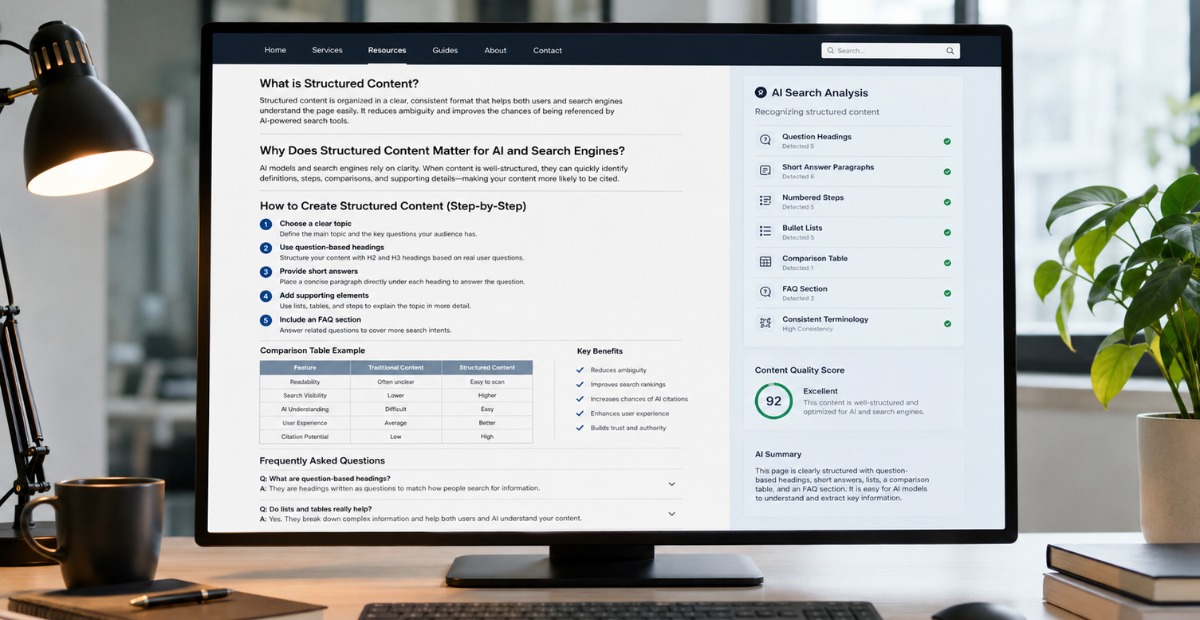
Structured content reduces ambiguity. Clear organization allows search engines and AI models to identify definitions, steps, comparisons, and supporting evidence more efficiently.
Well-organized pages commonly include:
- Descriptive question-based headings
- Short answer paragraphs below each heading
- Numbered processes
- Bullet lists
- Comparison tables
- FAQ sections
- Consistent terminology
What Types Of Structured Content Help AI Extract Answers More Accurately?
Simple formatting helps AI models isolate reliable answers without interpreting large blocks of text.
The most effective formats include:
- Definition boxes
- Step-by-step instructions
- Tables comparing options
- Frequently asked questions
- Summary lists
- Clearly labeled sections
Google also recommends using structured data only when markup accurately reflects visible page content.
MORE ON THIS TOPIC: How Content Clusters Drive SEO and AI Visibility
How Can You Optimize Existing Website Content For AI Search Step By Step?
Existing content usually performs better after targeted improvements than complete rewrites. Prioritize pages that already receive impressions and strengthen clarity before expanding coverage.
Step 1. Identify High-Performing Pages
Use Google Search Console to locate pages with strong impressions but lower click-through rates. Those pages often present the quickest optimization opportunities.
Step 2. Answer The Primary Question Immediately
Write a concise answer within the first section. Keep the opening explanation between 30 and 60 words before adding supporting information.
Step 3. Improve Heading Structure
Use logical H2 and H3 headings that mirror natural search queries. Consistent hierarchy improves readability for users and machine parsing.
Step 4. Expand Supporting Information
Include:
- Lists
- Comparison tables
- Definitions
- Real examples
- Relevant statistics
Supporting detail increases topical completeness without creating unnecessary repetition.
Step 5. Strengthen E-E-A-T Signals
Support important claims with authoritative references that verify facts, industry standards, or technical guidance. Trusted sources such as government agencies, academic institutions, recognized standards organizations, and official search engine documentation strengthen credibility without replacing your own expertise.
Supporting evidence also helps AI systems evaluate the reliability of information when summarizing or citing content.
Step 6. Connect Related Topics
Internal links should connect closely related pages into topic clusters instead of isolated articles.
Example cluster:
- Website Design
- AI SEO Optimization
- Technical SEO
- Structured Data
- Content Strategy
Connected topics help search engines understand subject expertise across an entire website.
What Technical SEO Elements Still Matter For AI SEO Optimization?
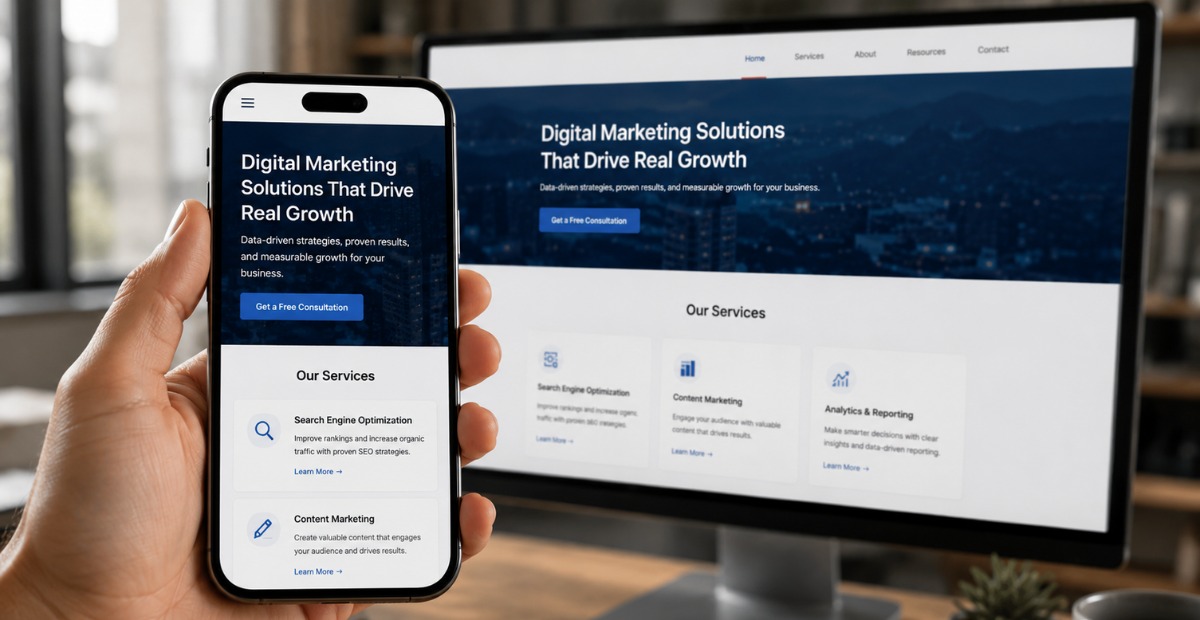
Technical SEO remains essential because AI systems still depend on searchable, accessible, and well-performing websites.
Important technical elements include:
- Mobile-friendly design
- Fast page speed
- Crawlable navigation
- XML sitemaps
- Canonical URLs
- HTTPS security
- Structured data
- Clean internal linking
Google evaluates page experience partly through Core Web Vitals, including loading performance, responsiveness, and visual stability. Technical optimization supports both AI understanding and traditional SEO rankings.
What Content Mistakes Can Reduce AI Visibility While Also Hurting Traditional SEO?
Poor organization, weak evidence, and outdated information reduce trust for both users and search systems.
Common mistakes include:
|
Mistake |
Better Practice |
|
Keyword stuffing |
Write naturally around search intent |
|
Thin content |
Cover the topic completely |
|
Long unstructured paragraphs |
Use headings and lists |
|
Unsupported claims |
Cite authoritative sources |
|
Duplicate pages |
Consolidate overlapping content |
|
Outdated statistics |
Review and refresh regularly |
Clear organization usually improves both readability and citation potential.
Frequently Asked Questions (FAQs)
Does AI SEO optimization replace traditional SEO?
No. AI SEO optimization builds upon traditional SEO. Rankings, technical quality, and authority still support AI visibility.
How often should website content be updated?
Review important pages whenever industry guidance changes, new evidence becomes available, or search intent evolves.
Does structured content improve rankings?
Structured content improves readability and helps search engines interpret page information. Rankings depend on many additional quality factors.
Is schema markup required for AI search?
Schema markup is not mandatory, but accurate structured data can improve search engine understanding of page entities and relationships.
How can businesses measure the success of AI SEO optimization?
Businesses should measure AI SEO optimization using a combination of traditional SEO and engagement metrics. Track organic rankings, search impressions, click-through rates, conversions, user engagement, and visibility in AI-generated search experiences.
Start Building A Website Strategy That Supports AI Search And Traditional SEO
Website design professionals help businesses develop websites that align with AI search, traditional SEO, and long-term business goals. Every project begins with a focused discussion about your audience, website objectives, content structure, technical requirements, and desired outcomes before recommendations are made.