
5 High-Converting Web Design Trends for 2026
- Miami Website Design Professionals' Team
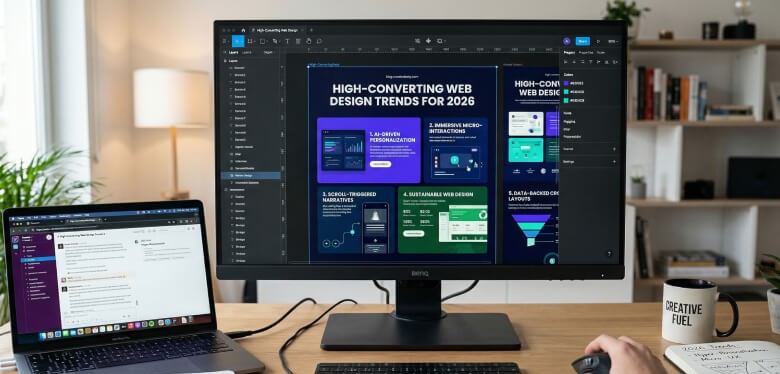
Web design in 2026 is no longer about visual trends alone. It is about measurable performance.
✔ Speed is foundational. A fast-loading site improves both rankings and conversions.
✔ Personalization increases relevance and engagement.
✔ Minimalist layouts reduce cognitive overload and guide users toward action.
✔ Interactive elements improve time on page when used strategically.
✔ Trust signals placed near calls to action significantly reduce buyer hesitation.
What’s Inside
With digital ad costs continuing to rise and organic competition intensifying, businesses cannot afford websites that simply look modern.
They need sites that convert. Research from Google shows that as page load time increases from one to three seconds, bounce rates rise by 32 percent. At five seconds, the probability of bounce jumps to 90 percent. Speed, structure, and strategic design now directly influence revenue.
The web design trends driving conversions this year share one common thread. They reduce friction and increase clarity. Below are the five most impactful trends shaping highly converting websites in 2026.
Why Conversion-Driven Web Design Matters More Than Ever in 2026

Traffic Is More Expensive
Customer acquisition costs have steadily increased across paid channels. Businesses are spending more on Google Ads, paid social, and SEO to generate traffic. When visitors land on a poorly optimized website, that investment is lost. A high-performing website ensures that each click has the highest chance of turning into a lead or sale.
UX Is Directly Tied to Revenue
User experience influences whether someone stays, engages, or leaves. According to Forrester Research, a well-designed user interface can increase conversion rates by up to 200 percent, while a better UX design can raise conversions by up to 400 percent. Clear navigation, intuitive layouts, and fast performance create confidence and reduce abandonment.
The Shift From Pretty to Profitable
Aesthetic appeal still matters, but design decisions must now be backed by data. Conversion rate optimization, behavioral analytics, heat mapping, and A B testing are integrated into modern web design processes. Businesses are tracking metrics such as scroll depth, form completion rate, click-through rate, and time on page. Websites are built to perform, not just impress.
Top 5 Web Design Trends Driving Conversions in 2026
1. AI-Powered Personalization in Real Time
➤ What It Is
AI-powered personalization dynamically adjusts content based on user behavior, device type, referral source, or geographic location. Instead of presenting identical messaging to every visitor, websites tailor headlines, calls to action, and offers in real time.
➤ Why It Drives Conversions
Personalization increases relevance. Research from McKinsey shows that personalization can reduce customer acquisition costs by up to 50 percent and increase revenue by 5 to 15 percent. When users see content aligned with their intent, they are more likely to take action.
➤ Examples
An ecommerce site may display previously viewed products to returning users. A service-based business may show a different headline to paid ad traffic compared to organic visitors. A local company may automatically highlight services specific to the visitor’s region.
➤ Implementation Tip
Start with behavioral triggers such as exit intent popups or scroll based offers. Integrate CRM data to recognize returning visitors. Focus on clarity, not complexity. Personalization should simplify decisions, not overwhelm users.
2. Ultra Fast, Core Web Vitals Optimized Performance
➤ What It Is
Core Web Vitals measure loading performance, interactivity, and visual stability. Metrics such as Largest Contentful Paint, Interaction to Next Paint, and Cumulative Layout Shift determine how users experience a site in real time.
➤ Why It Drives Conversions
Speed impacts both rankings and user behavior. Studies consistently show that even a one second delay can significantly reduce conversions. Mobile users in particular expect near instant load times. If a page hesitates, they leave.
➤ Key Metrics to Monitor
Largest Contentful Paint should occur within 2.5 seconds. Interaction to Next Paint should remain under 200 milliseconds. Cumulative Layout Shift should stay below 0.1 to prevent content from jumping unexpectedly.
➤ How to Improve Website Speed
- Compress and properly size all images before upload.
- Remove unused plugins and third party scripts.
- Enable lazy loading for images and video.
- Invest in high performance hosting infrastructure.
- Minify CSS, JavaScript, and HTML files.
Speed optimization is not optional in 2026. It is foundational.
3. Conversion Focused Minimalism
➤ What It Is
Conversion focused minimalism removes visual clutter and emphasizes a single primary objective per page. Clean layouts, strong typography, intentional white space, and clear hierarchy guide the user’s attention.
➤ Why It Converts Better
The human brain processes simple layouts faster. Excessive navigation options and competing calls to action increase cognitive load. Research in behavioral psychology confirms that too many choices can decrease decision making speed and confidence.
➤ Before and After
A cluttered homepage with multiple banners, popups, and competing offers often confuses users. A focused homepage that clearly communicates value and presents one dominant call to action increases engagement.
➤ Design Elements That Matter
White space improves readability. High contrast buttons draw attention to key actions. Above the fold messaging should clearly explain what the business offers and who it serves. Every design element must support the primary conversion goal.
4. Interactive and Micro Engagement Elements

➤ What It Is
Interactive elements include subtle animations, hover effects, dynamic pricing calculators, quizzes, and scroll triggered transitions. These features encourage active engagement rather than passive scrolling.
➤ Why It Drives Conversions
Interactive content increases time on page and encourages exploration. According to research from the Content Marketing Institute, interactive content generates higher engagement rates compared to static content. When users interact with a site, they build familiarity and trust.
➤ Smart Uses
Pricing calculators help users estimate costs before contacting sales. Service comparison sliders allow visitors to evaluate options visually. Expandable content sections keep pages clean while offering deeper information for those who want it.
➤ Caution
Interactive features must support performance and clarity. Overuse can slow load times or distract from the main objective. Test performance impact before deploying complex animations.
5. Trust Centric Design and Social Proof Integration
➤ What It Is
Trust centric design strategically integrates testimonials, reviews, case studies, certifications, and recognizable client logos throughout the user journey.
➤ Why It Drives Conversions
Consumers rely heavily on peer validation. Surveys from BrightLocal consistently show that most consumers read online reviews before making a purchasing decision. Social proof reduces perceived risk and reinforces credibility.
➤ Where to Place Trust Signals
Position testimonials near calls to action. Include short case study highlights on service pages. Add security badges near checkout or form submission areas. Use data-driven testimonials that reference measurable results whenever possible.
➤ Advanced Tactic
Segment testimonials by industry or service category. When visitors see feedback from businesses similar to their own, trust increases significantly.
How to Align These Trends With Your Business Goals
Step 1
Audit your current conversion rate. Identify high traffic pages with low engagement. Use analytics and heat mapping tools to pinpoint friction points.
Step 2
Define your primary conversion goals. Clarify whether you are optimizing for phone calls, form submissions, purchases, or booked consultations.
Step 3
Prioritize high-impact pages. Start with your homepage, top landing pages, and core service pages where traffic volume is highest.
Step 4
Test and optimize continuously. Run A B tests on headlines and calls to action. Review performance data quarterly and refine based on measurable results.
Common Web Design Mistakes That Hurt Conversions in 2026
Designing without performance data remains a common issue. Ignoring mobile optimization reduces accessibility for a majority of users. Weak or vague calls to action create uncertainty. Slow loading pages drive abandonment. Complex navigation structures increase drop off rates. Avoiding these mistakes is often more impactful than chasing the latest design trend.
Frequently Asked Questions
What is the most important web design trend for conversions in 2026?
Speed and clarity. If your website is slow or confusing, advanced features will not compensate for the lost trust and engagement.
How often should a website be updated?
A comprehensive redesign every two to three years keeps design and technology current. Conversion optimization and performance improvements should happen on an ongoing basis.
Does web design affect SEO rankings?
Yes. Page speed, mobile usability, and user engagement signals influence search visibility and ranking performance.
Are interactive features necessary for small businesses?
Not always, but strategic interactive elements such as calculators or expandable FAQs can significantly improve engagement and lead generation.
Should aesthetics or performance come first?
Performance should lead. A visually impressive website that fails to convert does not support long term growth.
Turn Your Website Into a Conversion Engine in 2026
The highest converting websites in 2026 are fast, personalized, minimal, interactive where it matters, and built around trust. Design is no longer separate from marketing. It is a core revenue driver.
Businesses that treat their website as a strategic growth asset consistently outperform competitors who treat it as a digital brochure. If your current site is not aligned with these trends, it may be limiting your results.
Your local Miami Website Design Professionals builds performance-driven websites grounded in strategy, user experience, and measurable growth outcomes.